

Cran-Career Spotlight: Crop Scout
Growing healthy crops begins with careful observation and timely decision-making. In this Cran Career Spotlight, we meet a Crop Scout. This career combines plant science, attention to detail, problem-solving, and fieldwork to monitor crop health throughout the growing season. From identifying insects, diseases, weeds, and nutrient deficiencies to collecting field data and reporting findings to growers, crop scouts provide valuable information that helps farmers make informed management decisions and protect their crops.
For rural communities, careers like this play a vital role in supporting successful agricultural production. In the cranberry industry, crop scouts regularly monitor cranberry beds to detect potential problems before they become widespread, helping growers respond quickly and effectively. Their work supports healthy vines, improves crop quality and yield, and promotes responsible use of crop protection products. By providing the information growers need to make science-based decisions, crop scouts help strengthen cranberry operations and the rural communities that depend on them.
Overview


A crop scout inspects cranberry beds/fields for insects, weeds, disease and over all plant health. Detailed reports are created to aid the growers in making timely crop management decisions.
What is this career like?
Crop scouts work mostly in the field and office. Crop scouts make weekly field visits to observe plant health and potential pest problems. Findings are reported to the farmers/growers and management decisions are discussed. In the office Crop Scouts prepare reports and supplies.
Some of the things crop scouts might do:
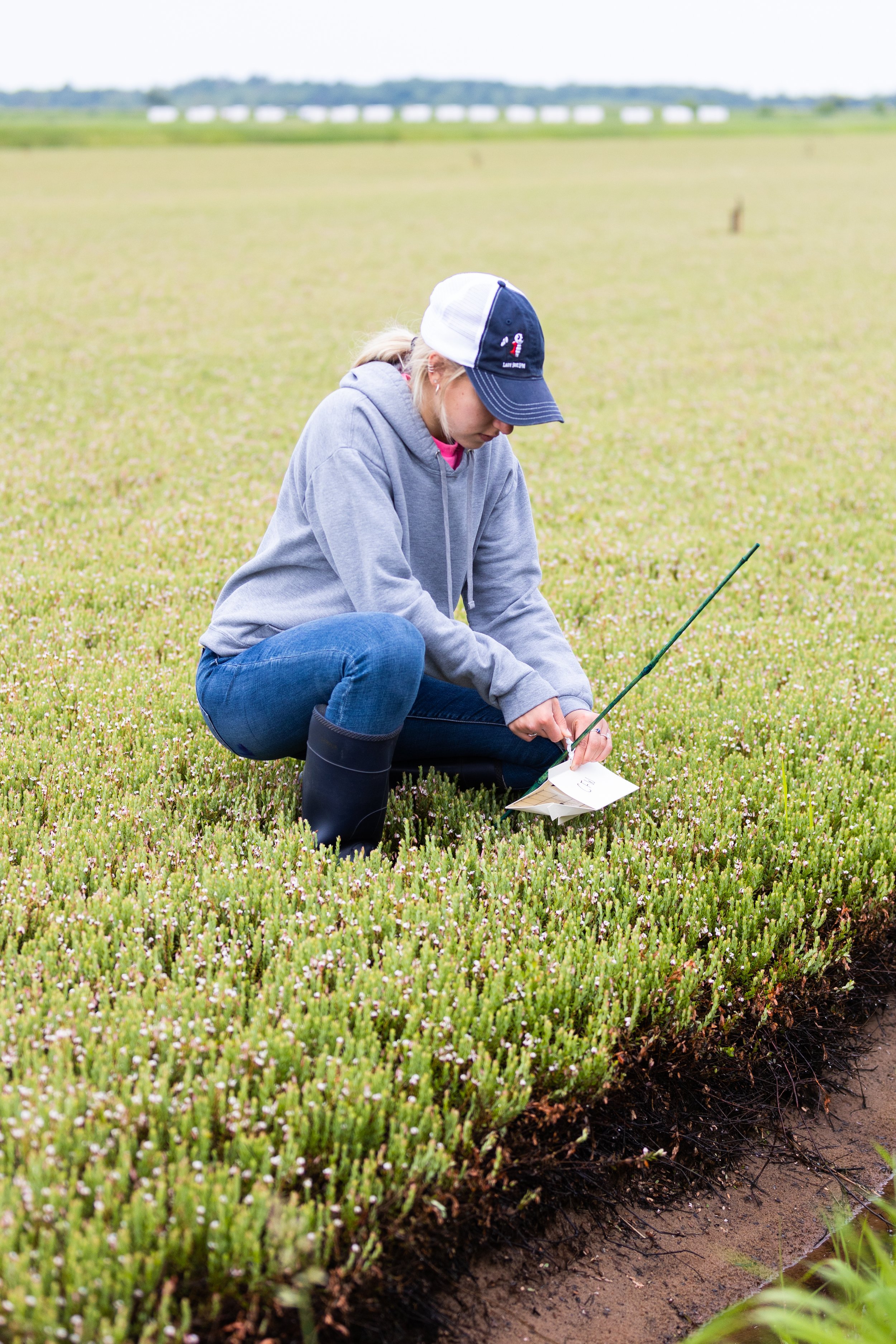
Identify insects, weeds, and diseases to develop an Integrated Pest Management Plan.
Collect soil and tissue samples to help form a Nutrient Management Plan.
Analysis data and present findings to farmers.
What skills are needed?
Organizational Skills: Crop scouts can visit numerous beds/fields in a day and need to have all supplies, reports and maps organized to be efficient.
Analytical skills. Crop scouts report their findings in an analytical format such as insect per series of sweeps or adults counted in traps per 10 acres.
Communication skills. Crop scouts present and explain their findings to audiences of varying backgrounds writing daily reports.
Interpersonal skills. Crop Scouts typically work on teams with other crop scouts and a crop consultant. Team members must be able to work together effectively to achieve their goals.
Problem-solving skills. Crop scouts’ observations can result in management actions from the farmer they need to be able to distinguish economic thresholds.
Self-discipline. Crop scouts may spend a lot of time working alone. They need to stay motivated and get their work done efficiently.


What education is required?

Although a degree in horticulture, entomology, agronomy, crop science, etc. is extremely helpful there is no education required to be a crop scout. This is a great entry level job that will give valuable insight into crop production.
The following high school courses are helpful: agricultural education, mathematics, English, biology, chemistry, and environmental science.